Arms & Heritage symposium – France

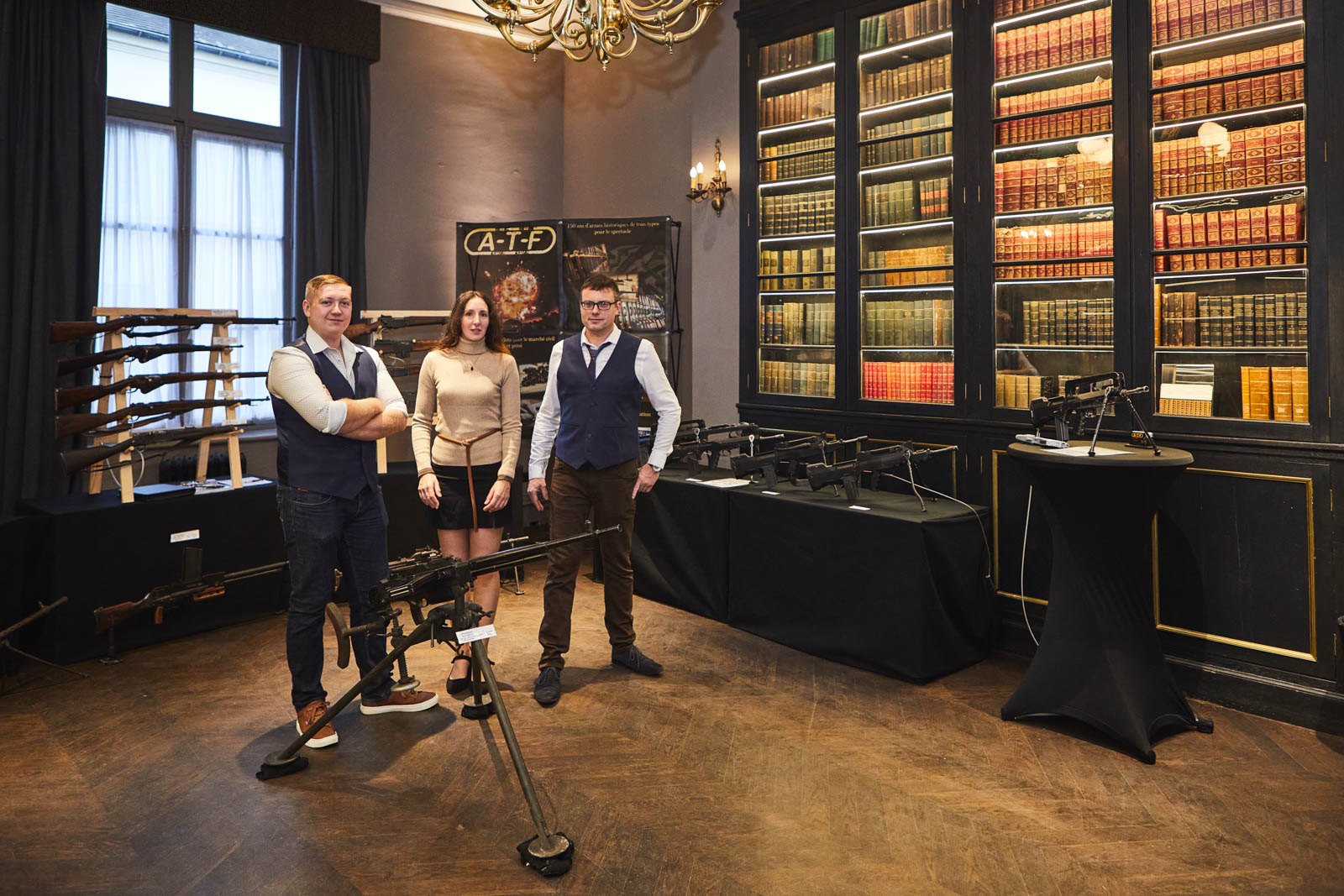
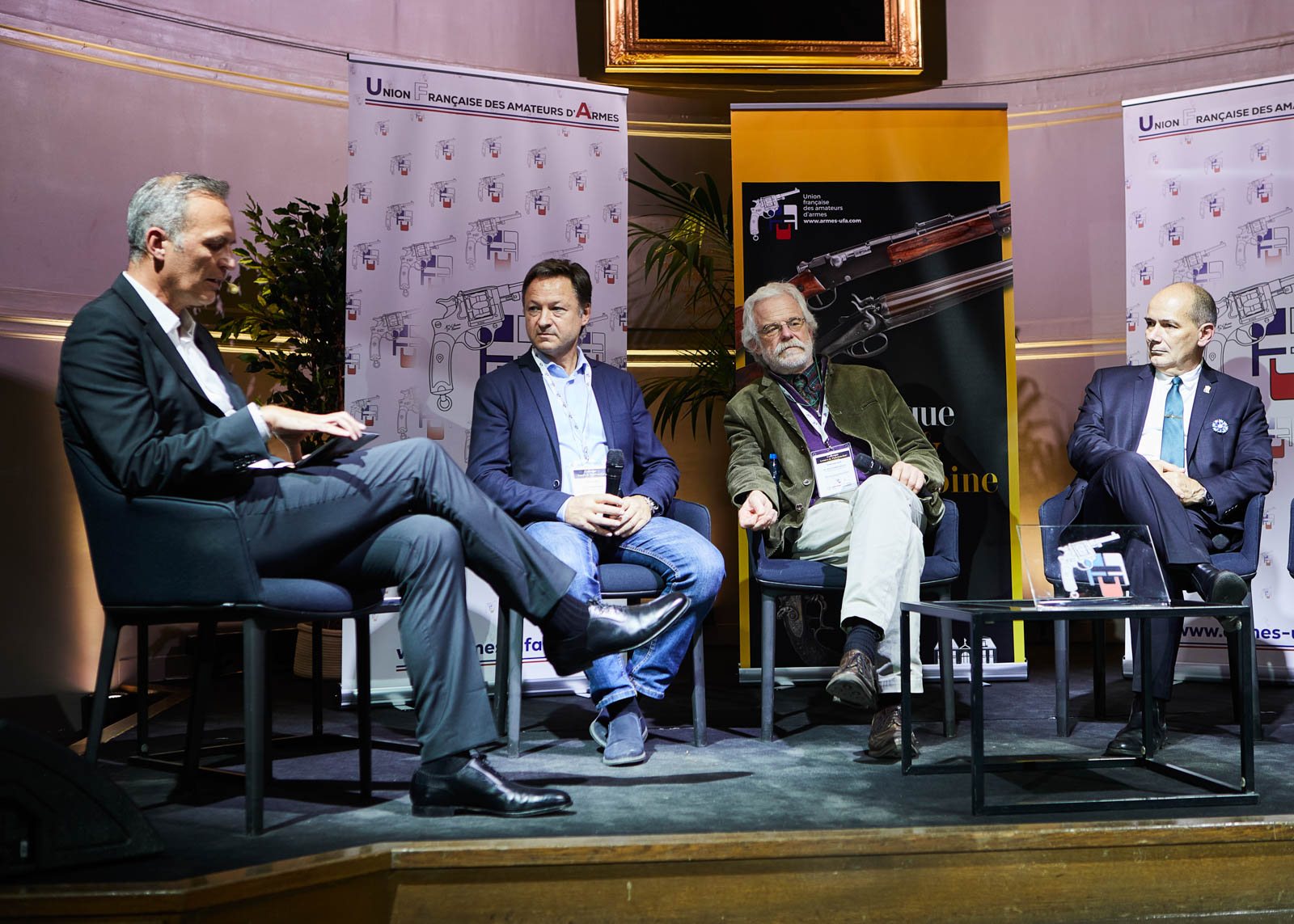
The French delegates of FESAC, representing the Union Française des Amateurs d’Armes (UFA), organized the “Arms & Heritage” symposium on November 9 in Paris, France. This remarkable event brought together leading figures from the French arms community, including manufacturers, gunsmiths, museums, athletes, experts, law enforcement officials, and representatives from shooting and hunting federations, among others.
European FESAC delegates also took part in this unprecedented gathering, making it a truly international occasion.
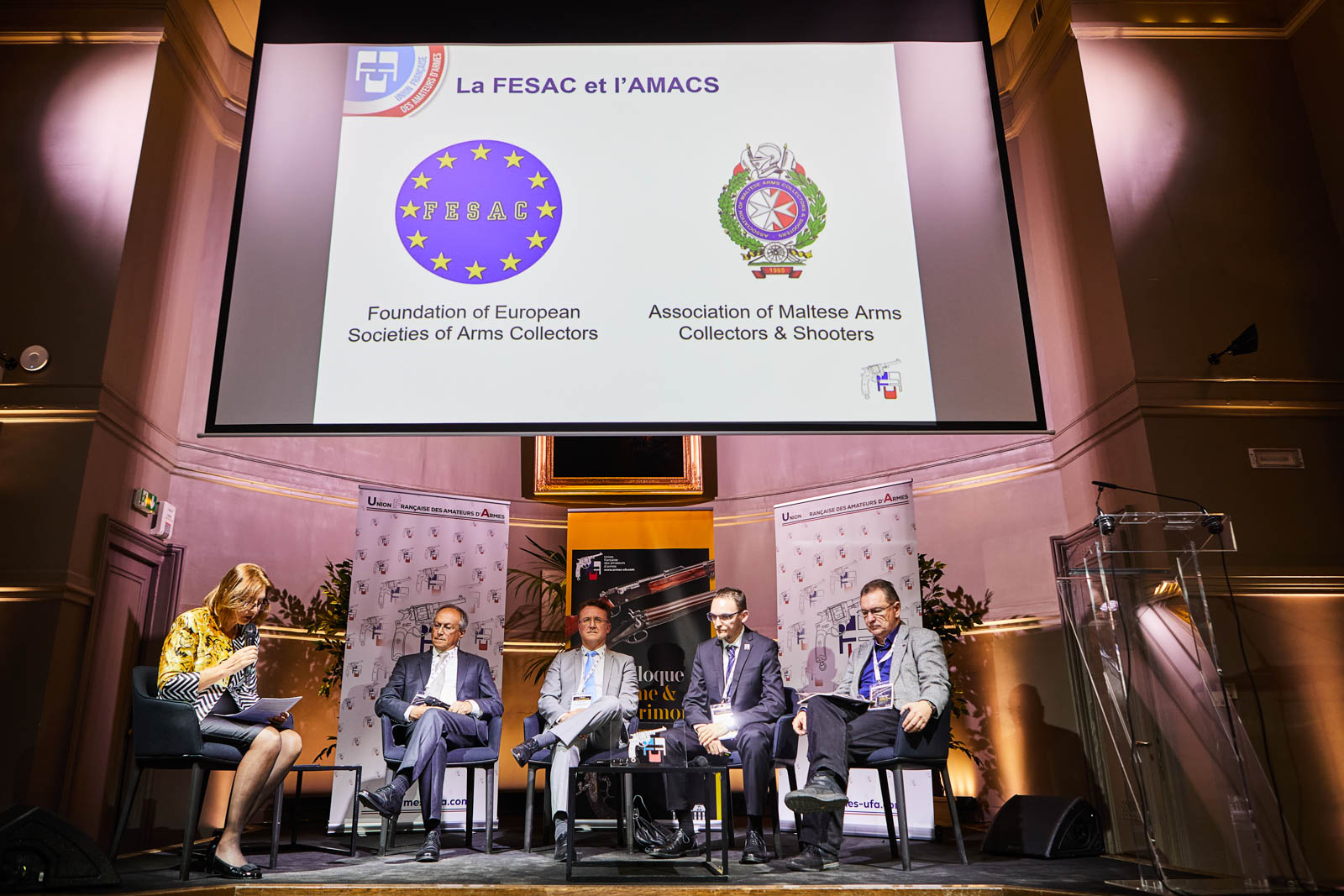
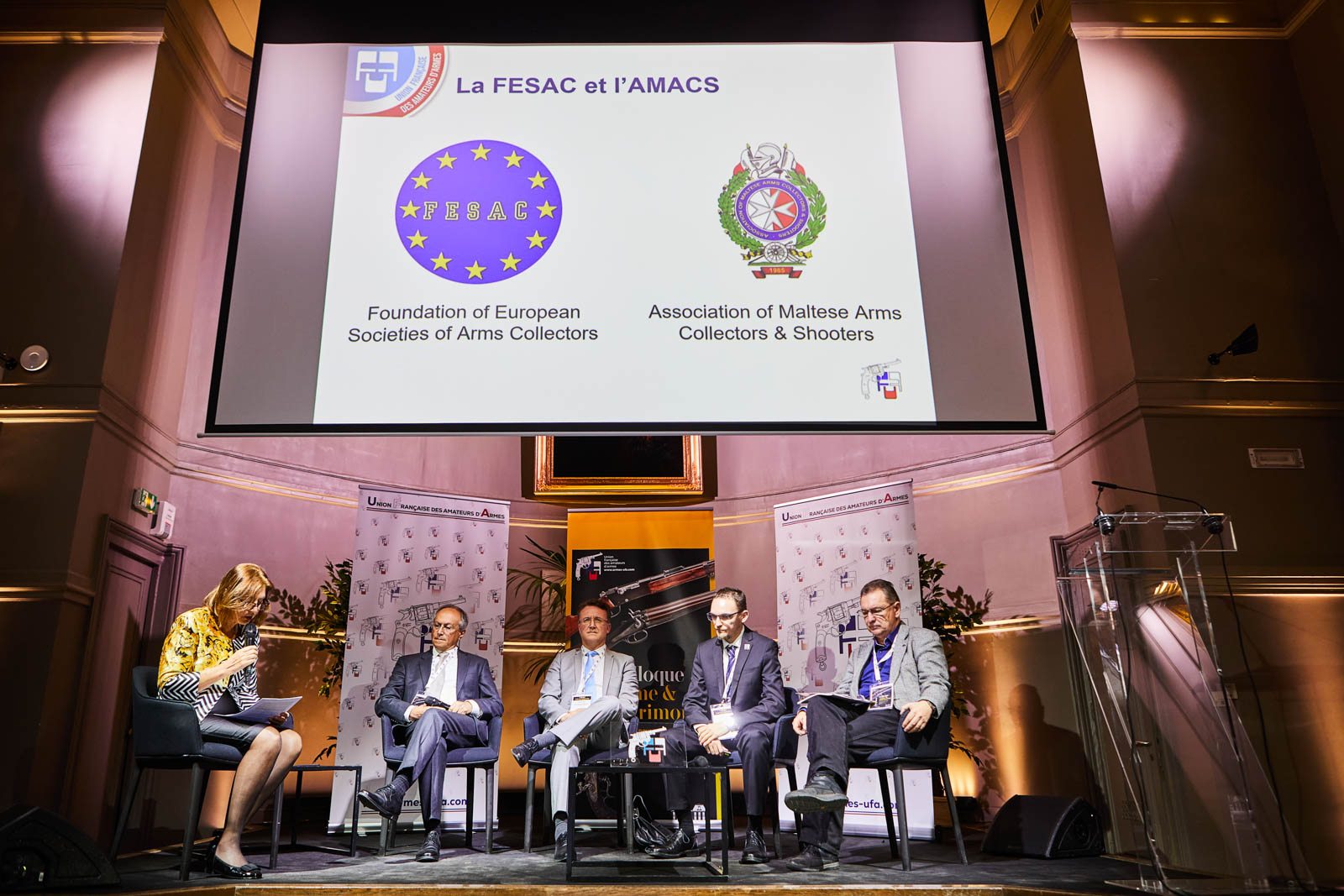
(left to right) Ann PETRONI (Malta) – Stephen PETRONI (FESAC Chairman and AMACS President – Malta) – Stéphane NERRANT (FPVA President – France) – Michaël MAGI (UFA Vice-President – France) – Ioan GAUCAN (ANCA President – Romania)
Arms collection in Europe – FESAC perspective
The origins of mankind’s passion for collecting, researching and conserving artefacts – the essence of anthropology – began in the ancient world with arms. Arms taken from the enemy as trophies eventually led to their study and conservation, forming the basis of the pursuit of collecting artifacts that recount man’s history in all its aspects.

A common misconception among those who have never felt the urge to collect is that the conservation of artefacts documenting man’s past is the exclusive domain of state museums. While objects of exceptional importance and value are understandably found in such institutions, it is equally true that the combined effort of private collectors to hunt for, identify, study and conserve artefacts is on a scale that totally outweighs museums in quantity, frequency and attention to detail. The proof of this claim lies on the shelves in museum libraries, in the reference books authored by private collectors, who through their passion have accumulated invaluable knowledge through owning and studying artefacts.
This interesting perspective is even more evident in the collecting of arms, which shaped Europe’s history and touched generation after generation of our ancestors and left particularly rich evidence of technological ingenuity, business acumen and political undertones. Coupled with their historical and often very personal background, it is no wonder that arms remain a prominent collecting theme, attracting the attention of successive generations of collectors and auction houses vying to offer the finest collections when their owners can no longer curate them. The overall activity of arms collectors, who curate a vast cultural wealth, is a hugely positive contribution to society.
On the other hand, the writing of legislation on arms and arms collectors without the sector’s valid participation tends to approach this activity from a negative perspective, creating laws that place unnecessary burdens on law-abiding citizens and which damage or even destroy historical arms. Moreover, such ill-conceived laws also burden police resources in enforcing them, diverting attention away from criminal activity.
It should be understood that authorised arms collectors are not only very dedicated conservators of our past, often being a source for the enhancement of existing national collections and in some cases even the origins of new ones, but they also represent the authorities’ best asset in the fight against illicit arms trafficking. Their knowledge and passion should be harnessed in an effort to bring all arms into the legal circuit.
I speak as a person who sits on both sides of the fence, firstly as a passionate collector and researcher of historic arms and secondly as an expert on arms legislation, having drafted my country’s current law and contributed to the 2017 EU Arms Directive.
Speaking of the Directive, I wish to emphasise that in its current form, it provides member states with the tools they require to permit bona fide collectors to fulfil their role within society without endangering safety and security. Most importantly, it defines a collector as follows:
“collector” means any natural or legal person dedicated to the gathering and conservation of firearms, essential components or ammunition for historical, cultural, scientific, technical, educational or heritage purposes, and recognised as such by the Member State concerned;
I believe that there are three main areas where national authorities are seriously endangering our common European arms heritage by not applying the spirit of the Directive.
The first issue is that some member states have taken an overly stringent approach, banning categories which may still be collected in others and rendering the concept of a Collector’s authorisation practically useless. This has led to the unnecessary deactivation, which I prefer to call ‘institutionalised vandalism’, of important arms and even their outright destruction. The danger this approach poses is not contained within the borders of that state, as it also impacts upon the legitimate transport of such arms across EU states, and thus has the potential to ensnare those who wish to operate within legal parameters.
Secondly, some jurisdictions lack an adequate legal mechanism to ensure that arms are not endangered following the death of an authorised collector. Once arms are within the legal circuit, they should be permitted to remain there, passing through the safe custody of a licensed firearms dealer in the transfer process to end up in another collection or possibly in a museum.
Finally, national laws should intelligently encourage the registration of arms that have remained outside the legal circuit. Given Europe’s history, it comes as no surprise that arms carried across its countless battlefronts remain hidden away and unregistered. No effort should be spared to bring them into the legal circuit by allowing authorised dealers the opportunity to register them, so that they eventually end up in collections, both national and private. Destroying these arms is not an option worthy of a civilised country that believes in conserving its past.
An effective and sensible arms law should focus on how a person qualifies for a collector’s authorisation and the safeguards offered to keep the collection safe. The difference between one firearms category and another becomes artificial and superfluous once the law and its enforcement are effective.
Stephen A. Petroni
Chairman, FESAC